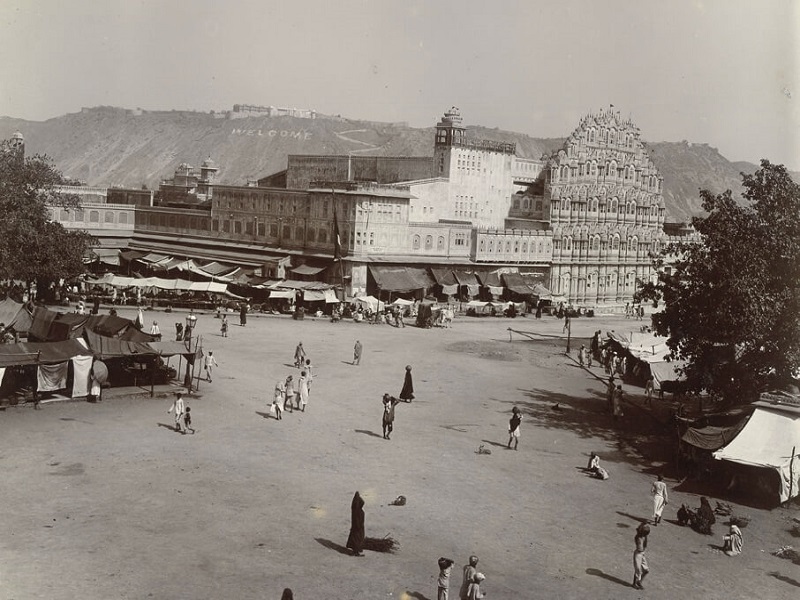
Hawa Mahal, or "Palace of Winds," is a iconic 5-story, pink sandstone landmark in Jaipur, India, built in 1799 by Maharaja Sawai Pratap Singh and designed by Lal Chand Ustad. Famous for its 953 small windows (jharokhas) and honeycomb design, it allowed royal women to observe street life while staying hidden, perfectly blending Rajput and Mughal architectural styles
Key Details About Hawa Mahal
Purpose: The palace was designed to allow royal ladies to watch street processions and festivals in privacy, adhering to the purdah system.
Architecture: It has a unique five-story, pyramid-shaped structure that stands without a traditional foundation, leaning at an 87-degree angle.
Features: It is renowned for its 953 intricately carved windows, known as jharokhas, which are decorated with small latticework, allowing for a continuous flow of air, which gives it the name "Palace of Winds".
Structure & Design: The interior features5 distinct floors: Sharad Mandir, Ratan Mandir, Vichitra Mandir, Prakash Mandir, and Hawa Mandir.
Significance: It serves as a stunning example of Rajput artistry and a symbol of Jaipur's heritage.
Rajasthan Tourism
Rajasthan Tourism